Shop By Brands
 All Products
 Sales and Support
Step by Step Guide to Using Spoon Excavators for Caries Removal
Step by Step Guide to Using Spoon Excavators for Caries Removal
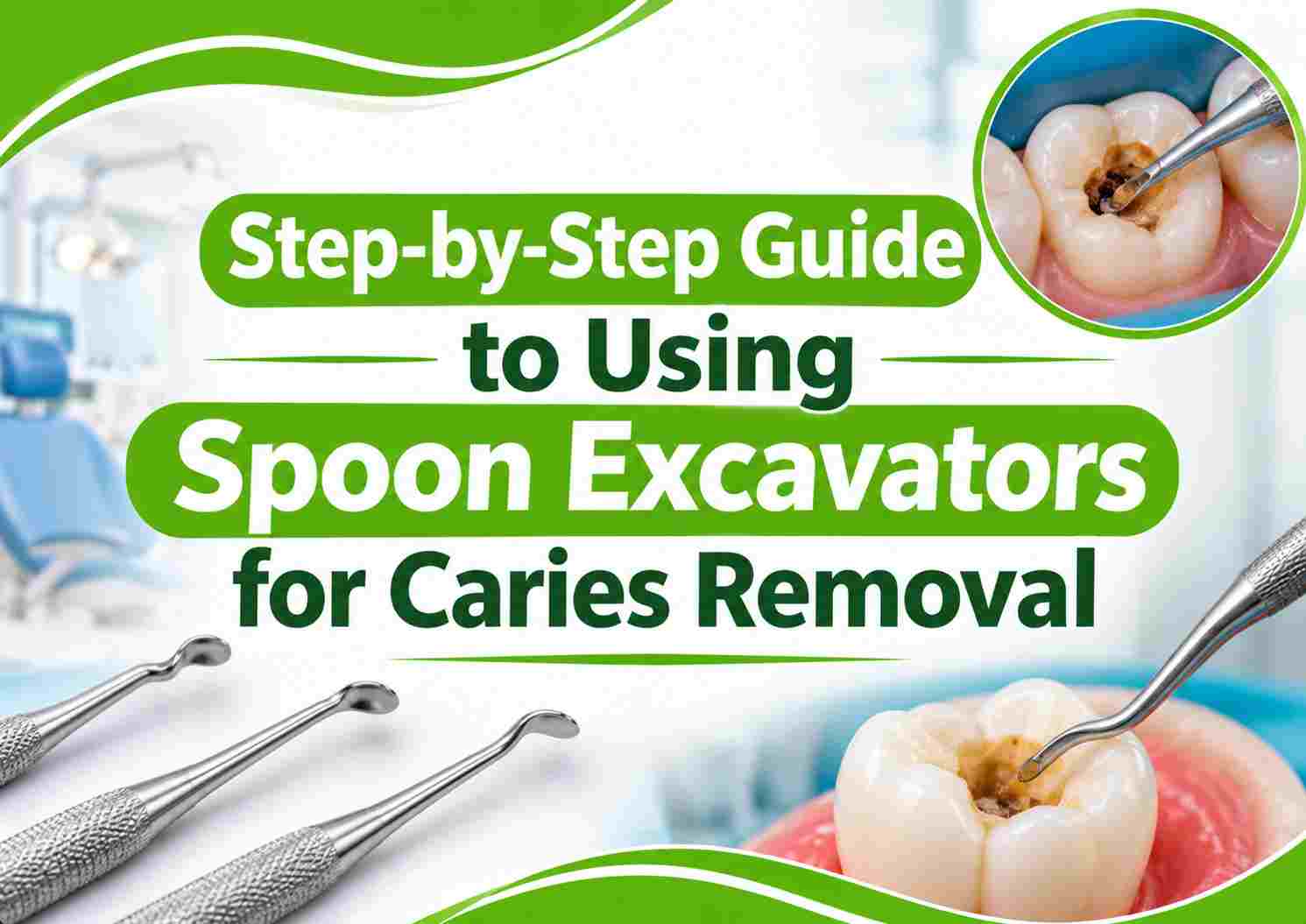
Step by Step Guide to Using Spoon Excavators for Caries Removal
Dental caries is one of the most common oral health conditions, and removing decayed tooth material is an important part of restorative dental treatment. Dental professionals use different hand instruments and rotary tools depending on the extent of decay, tooth condition, and treatment requirements. Among these instruments, spoon excavators play an important role in removing softened, infected dentin from cavities. Their curved working ends and spoon-shaped design allow dentists to access cavity areas and remove decayed material with controlled movements.
Using spoon excavators correctly requires proper instrument handling, clinical assessment, and an understanding of tooth structure. When used appropriately, these instruments can support conservative caries removal while helping preserve healthy tooth structure.
Understanding Spoon Excavators in Dental Practice
Spoon excavators are manual dental instruments designed primarily for removing softened carious dentin and debris from prepared cavities. They generally feature a small, curved, spoon-shaped working end that allows dental professionals to access different areas of a cavity. These instruments are available in different sizes and shapes to accommodate various clinical requirements.
Why Are Spoon Excavators Used for Caries Removal?
Spoon excavators offer several practical advantages during cavity preparation and restorative procedures:
- Controlled Material Removal: Their working ends allow dentists to remove softened decayed dentin using controlled hand movements.
- Access to Cavity Areas: Their curved design helps reach certain areas that may be difficult to access with larger instruments.
- Manual Precision: They provide tactile feedback that helps dentists assess the consistency of dentin during caries removal.
- Conservative Approach: They can support selective caries removal when used according to the clinical condition of the tooth.
Step-by-Step Guide to Using Spoon Excavators for Caries Removal
Proper technique is essential for effective cavity preparation. Dental professionals should follow appropriate clinical protocols and use the instrument carefully to avoid unnecessary removal of healthy tooth structure.
Step 1: Examine the Tooth and Assess the Cavity
Begin with a thorough clinical examination of the affected tooth. Assess the location, depth, and extent of the carious lesion using appropriate diagnostic methods. Radiographs may be required depending on the clinical situation. Identify the areas of softened dentin and determine the appropriate caries removal approach before starting the procedure.
Step 2: Prepare the Treatment Area
Ensure that the patient is comfortable and the treatment area is appropriately isolated. Local anaesthesia should be provided when clinically indicated. Follow standard infection-control procedures and ensure that the spoon excavator has been properly cleaned, sterilised, and inspected before use.
Step 3: Select the Appropriate Spoon Excavator
Choose a spoon excavator according to the size, location, and accessibility of the cavity. Smaller working ends may be useful for narrow or confined areas, while larger designs can help remove softened dentin from more accessible regions. Check the working end for damage or wear before beginning the procedure.
Step 4: Remove Softened Carious Dentin Carefully
Hold the instrument with a controlled pen grasp and position its working end against the softened carious dentin. Use gentle, controlled scraping movements to remove the decayed material. Avoid applying excessive pressure, particularly when working close to the dental pulp. The objective is to remove infected, softened tissue while preserving as much healthy tooth structure as clinically appropriate.
Step 5: Evaluate the Remaining Dentin
After removing the softened material, assess the remaining dentin carefully. Its colour and consistency can help guide clinical judgment, although colour alone should not determine whether additional removal is necessary. Depending on lesion depth and pulp status, selective caries removal may be appropriate to avoid unnecessary pulp exposure.
Step 6: Complete Cavity Preparation
Once the required caries removal has been completed, inspect the cavity and prepare it according to the restorative material and treatment plan. Clean the cavity using appropriate clinical procedures and proceed with the selected restorative treatment. Follow the manufacturer's instructions for the restorative materials being used.
Important Precautions While Using Spoon Excavators
Although spoon excavators are useful instruments, proper handling and maintenance are essential for safe and effective clinical use. Dental professionals should consider the following precautions:
- Avoid Excessive Pressure: Use controlled movements to prevent unnecessary removal of tooth structure.
- Select the Correct Size: Choose an instrument that provides suitable access to the cavity.
- Maintain Instrument Sharpness: Inspect the working end regularly and replace or maintain instruments according to manufacturer recommendations.
- Follow Sterilisation Guidelines: Clean and sterilise reusable instruments according to validated instructions.
- Protect the Dental Pulp: Exercise additional care when removing decay from deep cavities.
- Use Proper Clinical Judgement: Determine the caries removal endpoint according to lesion depth, pulp condition, and current clinical recommendations.
Conclusion
Spoon excavators are useful hand instruments in restorative dentistry, particularly for removing softened carious dentin during cavity preparation. Their spoon-shaped working ends, controlled handling, and tactile feedback help dental professionals perform selective caries removal while preserving healthy tooth structure whenever clinically appropriate.
Understanding the correct technique, selecting suitable instrument sizes, and following proper sterilisation procedures are important for maintaining effective clinical practices. Choosing good-quality dental instruments also supports consistent handling and reliable performance during restorative procedures.
Whether dental professionals are upgrading their existing instruments or expanding their clinical equipment collection, selecting dependable products is essential. Oral Health Cart provides dental instruments and equipment to support the requirements of modern dental practices. Choosing suitable spoon excavators and other restorative instruments can help dental professionals maintain clinical standards and provide quality patient care.
Categories: Impression Material


Certifications & Registrations
Our business registrations and compliance credentials reflect our commitment to quality, reliability and professional standards.