
 Shop By Brands
 All Products
 Clinic Setups
 Sales and Support
A Complete Guide To Autoclave Cycles Gravity Pre Vacuum & More Explained
A Complete Guide To Autoclave Cycles Gravity Pre Vacuum & More Explained
A Complete Guide To Autoclave Cycles Gravity Pre Vacuum & More Explained
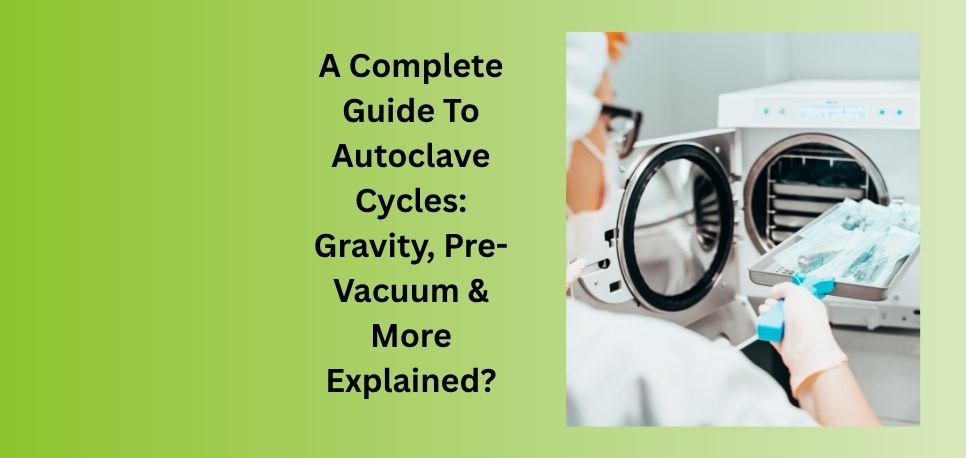
Sterilization is one of the most critical processes in every dental clinic. Properly sterilized instruments protect patients, prevent cross-contamination, and help clinics maintain high standards of infection control. At the heart of this process is the autoclave, a machine that uses pressurized steam to eliminate bacteria, viruses, fungi, and bacterial spores from reusable dental instruments.
However, not all sterilization cycles are the same. Different types of instruments require different autoclave cycles to achieve effective sterilization. Understanding A Complete Guide To Autoclave Cycles: Gravity, Pre-Vacuum & More Explained can help dental professionals choose the right cycle, improve workflow, and extend the lifespan of their instruments.
At Oral Health Cart, we provide advanced dental autoclaves and sterilization equipment designed to meet the evolving needs of modern dental practices.
What Is an Autoclave Cycle?
An autoclave cycle is the complete sterilization process that includes several stages:
-
Air removal
-
Steam generation
-
Exposure to sterilization temperature
-
Pressure control
-
Drying phase
Each stage is carefully controlled to ensure microorganisms are completely destroyed while protecting the integrity of dental instruments.
Selecting the appropriate cycle depends on the type of instruments being sterilized and their packaging.
Why Choosing the Right Cycle Matters
Using an incorrect sterilization cycle can lead to:
-
Incomplete sterilization
-
Wet instrument packs
-
Damaged instruments
-
Reduced equipment efficiency
-
Increased infection risks
Choosing the correct cycle ensures instruments are both sterile and ready for safe clinical use.
Gravity Displacement Cycle
The gravity displacement cycle is one of the oldest and most commonly used sterilization methods.
How It Works
Steam enters the chamber from the top, pushing cooler air downward and out through a drain. Once the chamber is filled with steam, the sterilization phase begins.
Best Suited For
-
Solid stainless steel instruments
-
Unwrapped instruments
-
Simple instrument trays
Advantages
-
Simple operation
-
Reliable sterilization for basic instruments
-
Lower equipment cost
-
Suitable for smaller clinics
Limitations
Gravity cycles are less effective for hollow, wrapped, or porous instruments because trapped air can prevent steam from reaching all surfaces.
Pre-Vacuum (Vacuum) Cycle
Modern dental clinics increasingly rely on pre-vacuum autoclaves due to their superior sterilization performance.
How It Works
Before steam enters the chamber, a vacuum pump removes nearly all the air. Steam then penetrates every surface of the instruments more effectively.
Best Suited For
-
Wrapped instruments
-
Hollow instruments
-
Surgical instruments
-
Dental handpieces (when validated by the manufacturer)
-
Complex instrument sets
Advantages
-
Better steam penetration
-
Faster sterilization
-
Improved drying
-
Reduced risk of incomplete sterilization
-
Ideal for high-volume practices
Because air is removed before steam enters, pre-vacuum cycles provide highly consistent sterilization results.
Pulsed Vacuum Cycle
Some advanced autoclaves use multiple vacuum pulses before sterilization begins.
How It Works
Instead of removing air only once, the machine performs repeated vacuum and steam pulses to eliminate trapped air more effectively.
Benefits
-
Excellent steam penetration
-
Effective sterilization of complex instruments
-
Improved drying performance
-
Reliable sterilization for challenging loads
This cycle is commonly found in high-performance sterilization systems.
Fast Cycle
Many modern autoclaves include fast sterilization programs for lightly loaded instruments.
Best Used For
-
Frequently used instruments
-
Emergency instrument turnaround
-
Small instrument loads
Advantages
-
Reduced waiting time
-
Increased clinic productivity
-
Faster patient scheduling
Fast cycles should only be used according to the manufacturer's recommendations for compatible instruments.
Drying Phase
Although often overlooked, drying is an essential part of every sterilization cycle.
Proper drying helps:
-
Prevent moisture contamination
-
Protect sterilization packaging
-
Reduce corrosion
-
Maintain sterility during storage
Removing instruments before they are fully dry can compromise the effectiveness of sterilization.
Factors That Influence Cycle Selection
Choosing the correct cycle depends on several considerations.
Instrument Type
Solid, hollow, surgical, and delicate instruments may require different sterilization methods.
Packaging
Wrapped instruments generally benefit from vacuum-assisted cycles for better steam penetration and drying.
Clinic Workload
Busy practices often prefer faster, automated cycles that improve instrument turnover.
Manufacturer Instructions
Always follow the recommendations provided by both the autoclave and instrument manufacturers.
Common Mistakes When Selecting Autoclave Cycles
Many clinics unknowingly reduce sterilization effectiveness by making simple mistakes.
Common errors include:
-
Choosing the wrong cycle for wrapped instruments
-
Overloading the chamber
-
Interrupting drying cycles
-
Using inappropriate packaging
-
Ignoring maintenance requirements
Proper staff training helps avoid these problems and ensures consistent sterilization performance.
Modern Features That Improve Autoclave Cycles
Today's dental autoclaves include advanced technologies that simplify sterilization.
Common features include:
-
Digital touchscreen controls
-
Automatic cycle selection
-
Intelligent pressure monitoring
-
Maintenance reminders
-
Automatic drying optimization
-
Error detection systems
These technologies improve reliability while reducing operator workload.
Maintaining Consistent Sterilization Performance
Regardless of the cycle used, routine maintenance is essential.
Best practices include:
-
Cleaning the chamber regularly
-
Using distilled or manufacturer-approved water
-
Inspecting door seals
-
Replacing filters as recommended
-
Monitoring sterilization cycles with appropriate indicators
-
Scheduling professional servicing
Proper maintenance extends equipment lifespan and ensures dependable sterilization.
Why Modern Dental Clinics Prefer Advanced Autoclaves
Modern sterilization units provide significant advantages over older systems.
Benefits include:
-
Faster sterilization
-
Improved energy efficiency
-
Better drying performance
-
Enhanced safety features
-
Digital monitoring
-
Greater instrument compatibility
These improvements help clinics deliver safer, more efficient patient care.
Why Choose Oral Health Cart?
At Oral Health Cart, we understand that effective sterilization is essential to every successful dental practice.
We offer:
-
Advanced dental autoclaves
-
Reliable sterilization equipment
-
Premium dental instruments
-
Competitive pricing
-
Expert product guidance
-
Dedicated customer support
Our carefully selected products help clinics maintain the highest standards of infection control while improving daily productivity.
Understanding A Complete Guide To Autoclave Cycles: Gravity, Pre-Vacuum & More Explained enables dental professionals to choose the most appropriate sterilization method for their instruments and clinical workflow. Whether using gravity displacement for basic instruments or pre-vacuum technology for wrapped and complex devices, selecting the correct cycle is essential for effective infection control and equipment longevity.
By investing in advanced sterilization solutions from Oral Health Cart and following recommended operating procedures, dental clinics can improve efficiency, protect valuable instruments, and provide a safer environment for both patients and healthcare professionals. Proper sterilization is not just a routine process—it is a fundamental part of delivering high-quality dental care.
Categories: Dental Lab Setup Package


Certifications & Registrations
Our business registrations and compliance credentials reflect our commitment to quality, reliability and professional standards.

